


Good morning. Got a good one for you gents on this fine Tuesday.
Due to many of you asking and DMing me, today we are going to dive into one of my favorite topics and that is how to prepare for the world we live in.
I know.
New subscribers probably hear this and think we are going to go down some insane nuclear war - bury a shipping container in your backyard - and eat ramen for months - rabbit hole.
Thankfully, there are many more practical ways to remain prepared for our changing world in 2026 and beyond and I am a huge proponent of spreading awareness about them.
Few of them rely on hiding in the ground like a rat. I view preparation as a basic input into how I approach life now. I layer in contingencies, plan for bad outcomes, and try to ensure that whatever obstacle I encounter can be dealt with swiftly and efficiently.
Today we are joined by former SEAL Team Commander Sam Havelock of The SOFX Report, the world's leading intelligence report on the conflict, security, and technology issues. SOFX started as a daily reader/email for the special operations community.
What began as an open source intelligence report for special operations and intelligence professionals now serves defense and security industry professionals, government program offices, intelligence and policy analysts, and high-impact people who want reliable, high-trust, apolitical reporting.
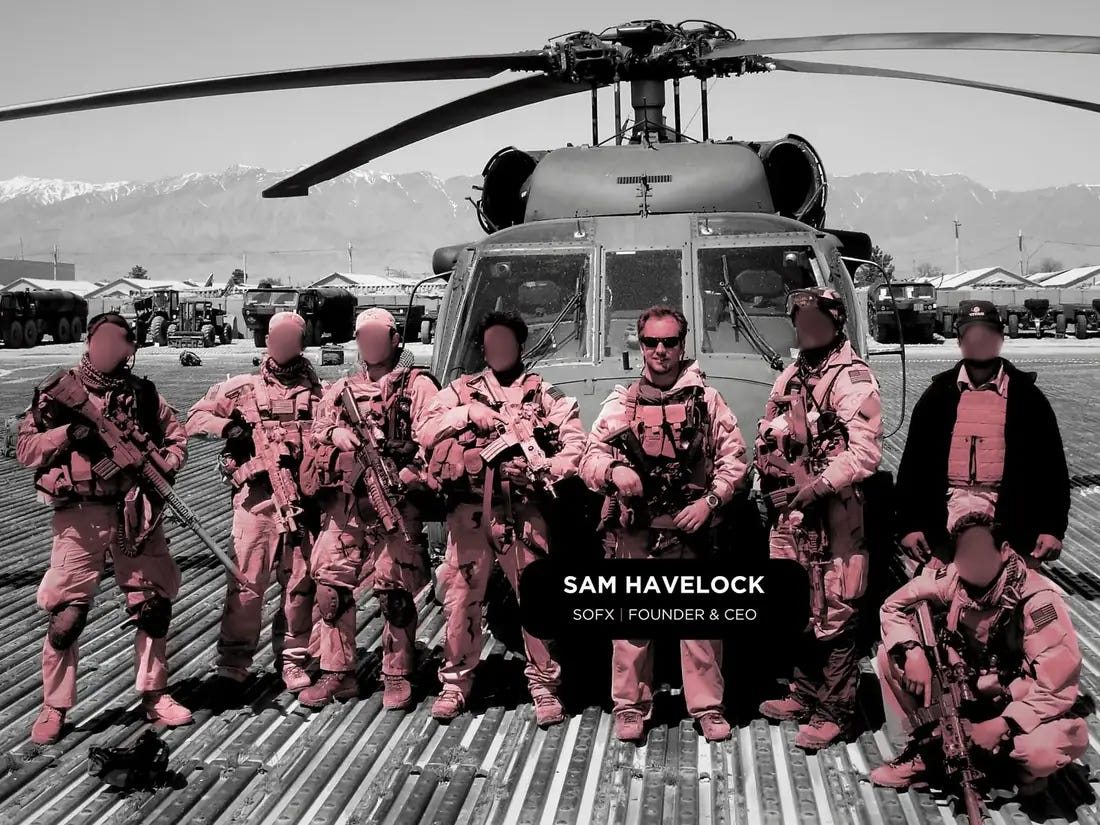
Sam and I recently connected to discuss the state of the world, our newsletters, our shared interest in being prepared for this new world, and how we are thinking about the range of new threats, risk, and opportunities in this rapidly changing macro environment.
We agree on quite a bit but we’re lucky to have him join the conversation to give his input into prepping and what he thinks of major world events at present.
Today we’re going to follow a straightforward format and touch on prepping across the following areas of interest, which I have asked Sam to provide his insight into:
Financial markets - how to protect your money, preserve wealth, hedge, and be prepared for a worst case scenario for the US dollar, financial markets, or black swan events. Are you prepared for stretches of time without bank access or internet? Do you hold any physical cash, precious metals, or other bartering items?
World Events & Politics - One thing is for certain, we live in unprecedented times. There are wars raging, new cyber and AI threats, unrest in major cities and countries across the globe, daily new psy ops, and threats that most people aren’t even considering to prepare for. We live in some of the most polar political landscapes in history. Have you considered what comes next?
Firearms & Defensive Capability - In our soft world, there are far too many people who lack the ability to defend themselves and are foreign to use of force. As we watch violence and force being used in riots, protests, wars, by governments, and in new conflicts, it’s incredibly important to provide a framework for learning to defend yourself, your family, and your community
Contingencies, Medical, Life Necessities - While it is certainly not the sexiest concept within prepping, it is arguably the most important area to expand on. As populations grow, infrastructure breaks down, and systems become strained, being able to ensure you or your family can continue a normal life in the event these things fail should be one of your top concerns
Operating in Day to Day Life - What is your spiritual life like? If you aren’t spiritual do you spend time hardening yourself mentally? Seeking out discomfort? Learning news things? How often are you working out? Do you eat healthy? How often do you consider digital privacy or situational awareness when you are in public? These are inputs into daily mentalities that I believe matter very much when you live in volatile times. We will discuss some of my basic considerations and hear Sam’s thoughts as well.
So let’s get started.
Sam’s answers today are highlighted in Red.
Financial Considerations
The world keeps getting more and more chaotic when it comes to financial health, prosperity, and ensuring you can live comfortably. We talk at lengths in Arb Letter about what the major keys are for staying ahead in the new age:
Owning assets
Creating cash flowing businesses you own (and equity)
Obtaining high paying base + bonus/variable compensation roles in sales/tech/finance or if not, law/medicine etc.
Hedging your corporate job for layoffs with a side hustle
Investing in the future (crypto/tech/AI/defense/metals/real estate)
Keeping up with the dramatic shifts in financial markets and personal economics can be difficult. We have soaring interest rates, a dollar that is constantly losing value, unaffordable homes, record debt, robotics companies, cryptocurrencies, blockchains, AI super companies, and a job market for young people that is on life support.
The future will look incredibly different from today, but it will reward those who are resilient, adaptable, and diversified. I stress that last point. SPREAD OUT where you keep your assets guys.
Every person you ask will have a different short term and long term forecast on what is coming but something seems pretty obvious to me.
Regardless of the short term, I think a few things are pretty much guaranteed now.
We will continue to see asset prices climb and purchasing power erode, with periods of accelerating inflation unfolding alongside an AI, technology, and crypto revolution that reshapes how wealth is created and who captures it. There will be violent corrections along the way, but standing still financially while all of this unfolds is a risk of its own
In our lifetime we will see a large technological black swan, be it a violent market correction, cyber attack, banking crisis, rogue AI agent or attack on infrastructure
Anthropic just came out THIS week saying that rogue AI agents had tried to gain access to US government sites. We learned through a recent report this year that terror groups had used AI to program drone swarms and used Claude for biological research that could support the development of bioweapons.
Just this week hackers remotely defrosted refrigerators at hundreds of French supermarkets, causing massive food spoilage nation wide. Polymarket currently has just a 35% chance that the Iran x US ceasefire holds through the end of the year while the situation in the Strait of Hormuz is driving insane volatility in global markets. In Europe, social unrest is surging as populations protest education, immigration, and a bleak job market.
To cap it all off, an ISIS inspired plot to shoot up the Mall of America was foiled by the FBI recently when they arrested 18-year-old Sheikhdoon Abdullahi Mohamud.
Threats are evolving and changing and so should our preparation.
Let’s get into it.
Andy: Good morning Sam and thanks for being with us, a week without banks, electronic payments, or internet. What do you want in place? Where do cash, metals, and goods fit?
Sam:
Most people think that’s a money problem. It isn’t. It’s a logistics problem.
When payment systems stop working, can your family eat, stay warm, and take meds for seven to fourteen days without buying anything? If yes, the outage will cause everyone around you to chimp out, but you and yours should be OK.
So my order is: Goods first, then cash or “trade-ables”, then metals, which are also trade-ables.
Goods. Two weeks of food, water, fuel, and prescriptions already in the house. That’s the bare minimum. Thirty days is better if you can afford it and have storage room
Cash. One month in small bills, nothing larger than $50s split between two spots. Small bills, because nobody makes change when the registers do not work assuming anything is open to begin with.
Metals. Metals are a long-term savings and inflation risk hedge but I do think there is great value in maintaining your metal positions physically, meaning in your possession, not in an ETF, or somewhere you can’t get to it. I am a big fan of US Silver dollars although most precious metal-heads will argue against paying the percentage over bullion. The reason I like silver dollars is it is awfully hard to fake the coin, they are easily recognized the world over and because you can have more of them on hand and therefore transact at lower units of scale than say gold pieces.
There is an urban legend in the special operations community dating back to Vietnam regarding why Green Berets and SEALs wear Rolex watches.